China SHANGHAI DUBHE ENVIRONMENTAL PROTECTION&TECHNOLOGY CO.,LTD
SHANGHAI DUBHE ENVIRONMENTAL PROTECTION&TECHNOLOGY CO.,LTD
Shanghai DUBHE Environmental Protection Technology Co., Ltd. is a leading enterprise in the wastewater treatment market, providing comprehensive solutions and high-quality equipment. Our expertise covers a wide range of products, including various aeration devices (U.S. SSL), blowers, sludge dewatering systems, solid-liquid separation equipment, bio-filters, and other environmental protection technologies.As a high-tech company, we are deeply committed to the design, development, production, and ...
Learn More
Request A Quote
No. of Employees:
0+
Annual Sales:
0+
Year Established:
Export p.c
0%
We provide
the best service!
You can contact us in various ways
Contact Us
Fax
WhatsApp
8618019736003
Skype
Wechat
18019736003

quality Bubble Air Diffuser & Sludge Dewatering Machine factory

WHAT CUSTOMERS SAYS
SAGAR
2023-12-23 03:50:43
The service is superb! Their team is always warm and friendly, patient with my questions and really makes me feel satisfied."
SAGAR SHARMA
2023-12-23 03:54:12
The quality of the product is very high! My purchase is durable and practical, completely exceeded my expectations, thanks a lot for such an excellent product
Majid
2023-12-23 03:56:19
The logistics were fast! My order was delivered before the expected time, and I was pleasantly surprised by this efficiency." "Their communication was excellent! They maintained good communication throughout the transaction, kept me informed of the status of my order, and made the entire shopping process smoother.
Jucic
2023-12-23 03:57:18
Customer service was super attentive! Not only did they respond to questions quickly, but they were very helpful and that care made me feel special!
News View More
Next-Gen MBBR Biofilm Carriers Elevate Industrial Wastewater Treatment Efficiency
.gtr-container-mbbr7f9d { font-family: Verdana, Helvetica, "Times New Roman", Arial, sans-serif; color: #333333; line-height: 1.6; padding: 15px; box-sizing: border-box; max-width: 100%; overflow-x: hidden; } .gtr-container-mbbr7f9d p { font-size: 14px; margin-bottom: 1em; text-align: left !important; } .gtr-container-mbbr7f9d a { color: #0000FF; text-decoration: none; } .gtr-container-mbbr7f9d a:hover { text-decoration: underline; color: #0000CC; } .gtr-container-mbbr7f9d__main-title { font-size: 18px; font-weight: bold; color: #0000FF; margin-bottom: 1.5em; text-align: left; } .gtr-container-mbbr7f9d__section-title { font-size: 18px; font-weight: bold; color: #0000FF; margin-top: 2em; margin-bottom: 1em; padding-bottom: 0.5em; border-bottom: 2px solid #E0E0FF; text-align: left; } .gtr-container-mbbr7f9d__subsection-title { font-size: 16px; font-weight: bold; color: #333333; margin-top: 1.5em; margin-bottom: 0.8em; text-align: left; } .gtr-container-mbbr7f9d ul { margin: 0; padding: 0; list-style: none !important; } .gtr-container-mbbr7f9d ul li { list-style: none !important; position: relative; padding-left: 1.5em; margin-bottom: 0.5em; text-align: left; } .gtr-container-mbbr7f9d ul li::before { content: "•" !important; position: absolute !important; left: 0; color: #0000FF; font-size: 1.2em; line-height: 1; } .gtr-container-mbbr7f9d__table-wrapper { width: 100%; overflow-x: auto; margin-top: 2em; margin-bottom: 2em; } .gtr-container-mbbr7f9d table { width: 100%; border-collapse: collapse; min-width: 600px; } .gtr-container-mbbr7f9d th, .gtr-container-mbbr7f9d td { border: 1px solid #CCCCCC !important; padding: 10px; text-align: left; vertical-align: top; font-size: 14px; word-break: normal; overflow-wrap: normal; } .gtr-container-mbbr7f9d th { font-weight: bold; background-color: #E0E0FF; color: #0000FF; } .gtr-container-mbbr7f9d tbody tr:nth-child(even) td { background-color: #F8F8FF; } @media (min-width: 768px) { .gtr-container-mbbr7f9d { padding: 30px; max-width: 960px; margin: 0 auto; } .gtr-container-mbbr7f9d table { min-width: auto; } } Next-Gen MBBR Biofilm Carriers Elevate Industrial Wastewater Treatment Efficiency 1. Summary Optimizing filter media performance is essential for modern municipal and industrial wastewater treatment plants facing strict discharge limits. High-efficiency mbbr media serves as the critical biological carrier that enables Moving Bed Biofilm Reactor (MBBR) and Integrated Fixed-film Activated Sludge (IFAS) systems to dramatically boost volumetric loading rates. Engineered from premium high-density polyethylene (HDPE) with a specific gravity of 0.96 g/cm³ and a protected specific surface area exceeding 500 m²/m³, this advanced filter media provides an ideal micro-environment for microbial attachment, nitrifying bacteria growth, and rapid biofilm development. By utilizing robust mbbr media, facility managers can upgrade biological treatment capacity, enhance COD/BOD5 removal, and accomplish biological nutrient removal (BNR) without expensive civil engineering expansions. In this industry news report, we explore the physical properties, operational advantages, industrial application scenarios, and technical parameters of high-performance mbbr media and explain why upgrading your bioreactor filter media is the most cost-effective solution for sustainable effluent compliance today. 2. What In environmental engineering and biological wastewater treatment, high-efficiency mbbr media—frequently categorized under specialized biological filter media—refers to custom-molded polymer bio-carriers designed to suspend dynamically within biological aeration basins. Mechanically engineered from virgin High-Density Polyethylene (HDPE) reinforced with UV stabilizers and non-toxic additives, these bio-carriers feature an optimized specific gravity ranging between 0.96 g/cm³ and 0.98 g/cm³. This exact density range allows the filter media to achieve near-neutral buoyancy when submerged in water, enabling complete fluidization and uniform circulation throughout the reactor tank driven entirely by standard coarse or fine bubble aeration systems or submerged mechanical mixers. Physically, high-efficiency mbbr media is designed as a cylindrical, wheel-like, or multi-finned matrix with intricate internal cross-rib structures. The structural design maximizes the "protected" specific surface area—typically exceeding 500 m²/m³ to over 800 m²/m³—which shields fragile nitrifying, denitrifiers, and heterotrophic bacterial colonies from physical abrasion caused by carrier-to-carrier collisions and hydraulic shear stress. The outer perimeter features protective fins, while the internal channels are calibrated to facilitate rapid substrate diffusion and continuous liquid turnover, preventing sludge clogging and dead zones. From a biochemical process perspective, mbbr media functions as an immobilized cell carrier that facilitates the rapid formation of active, complex biofilms. Rather than relying solely on suspended activated sludge flakes, the filter media supports a concentrated fixed-film biomass density reaching up to 10,000 to 15,000 mg/L equivalent mixed liquor suspended solids (MLSS). The outer biofilm layer maintains aerobic conditions for organic carbon oxidation and ammonia nitrification, while inner sheltered layers foster anoxic micro-zones capable of simultaneous nitrification-denitrification (SND). Consequently, this advanced biological filter media transforms conventional aerobic and anoxic tanks into high-rate biological reactors capable of withstanding severe hydraulic shocks and organic load surges. 3. Why Wastewater treatment facility operators and industrial plant managers continually face demanding technical and financial challenges, including stricter environmental discharge regulations, land space constraints, fluctuating hydraulic loads, and escalating energy costs. Integrating high-efficiency mbbr media into existing or newly designed treatment trains directly addresses these operational pain points through several distinct biological and engineering advantages: 1. Massive Capacity Upgrade Without Civil Expansion For aging wastewater treatment plants struggling with population growth or increased industrial production, conventional activated sludge (CAS) systems require constructing new aeration basins and secondary clarifiers. Upgrading to high-efficiency mbbr media allows plant engineers to convert existing tanks into MBBR or IFAS configurations. By populating aeration tanks with 30% to 60% filling ratios of mbbr media, the volumetric organic loading capacity increases by 200% to 300% within the exact same physical footprint, eliminating millions of dollars in civil construction costs. 2. Exceptional Shock Load Resilience and Biofilm Stability Suspended activated sludge systems are vulnerable to hydraulic surges, toxic chemical spikes, and seasonal temperature drops, which often result in sludge bulking and biomass washout. Because biomass on mbbr media is firmly anchored inside protected inner cavities, the microbial community remains attached and fully functional even during severe hydraulic flushes. The dense biofilm acts as a natural buffer zone; after a chemical peak passes, the immobilized microorganisms quickly regenerate, restoring biological oxidation efficiency far faster than conventional suspended growth systems. 3. Superior Nitrification and Organic Removal Efficiency The continuous fluid motion of the biological filter media creates intense liquid-film shear, maintaining a thin, highly active biofilm layer (typically 100 to 300 microns thick). Thin biofilms eliminate diffusion limitations, allowing dissolved oxygen, ammonium, and organic carbon to easily reach inner bacterial layers. The high protected surface area (> 500 m²/m³) supports slow-growing autotrophic nitrifying bacteria (Nitrosomonas and Nitrobacter), significantly accelerating Total Nitrogen (TN) and Ammonia-Nitrogen (NH₃-N) removal even under cold climate conditions. 4. Low Maintenance, Self-Cleaning Design with Long Lifespan Unlike traditional fixed bio-filters or structured ceramic filter media that require frequent backwashing to clear sloughed biomass and prevent channeling, fluidizing mbbr media is entirely self-cleaning. The constant dynamic collision between carrier elements gently strips off excess, dead biomass while maintaining active young biofilm growth. Manufactured from high-tensile virgin HDPE, high-quality mbbr media resists acid, alkali, organic solvents, and physical wear, ensuring an operational service life exceeding 15 to 20 years with zero maintenance downtime. 4. How The deployment and operational implementation of high-efficiency mbbr media span diverse municipal and industrial applications, relying on precise mechanical parameters and customized process configurations: 1. Municipal Wastewater Treatment Upgrades (IFAS & MBBR) In municipal wastewater treatment plants (WWTPs), upgrading to an IFAS system involves adding mbbr media directly into existing activated sludge aeration basins equipped with fine bubble disc or tube diffusers. Non-clogging perforated retaining screens are installed at the tank outlet to retain the filter media while allowing treated water and excess sloughed sludge to pass through. Operating at a typical media filling ratio of 40% to 50% by volume, municipal plants routinely achieve chemical oxygen demand (COD) removal rates exceeding 90%, biological oxygen demand (BOD5) reduction below 10 mg/L, and complete nitrification even at water temperatures below 8°C. 2. High-Strength Industrial Effluent Treatment Industrial sectors such as textile dyeing, pharmaceutical synthesis, chemical refining, paper manufacturing, and food & beverage processing generate high-COD, hard-to-degrade wastewater. In multi-stage MBBR plants, anaerobic, anoxic, and aerobic MBBR tanks are lined sequentially with tailored mbbr media. The anaerobic/anoxic bio-carriers cultivate specialized anaerobic methanogens and denitrifiers that break down complex refractory aromatic compounds, while downstream aerobic filter media rapidly oxidizes remaining organic carbon. This staged fixed-film design prevents toxic shock to delicate microbial strains and easily handles COD concentrations up to 5,000–10,000 mg/L. 3. Recirculating Aquaculture Systems (RAS) In modern land-based fish farming and marine aquaculture, maintaining ultra-low toxic total ammonia nitrogen (TAN) and nitrite (NO₂⁻) levels is critical for aquatic animal survival. High-surface-area mbbr media with a specific surface area of 500 to 1200 m²/m³ provides compact biofiltration loops. Operating with minimal head loss and low energy consumption, fluidized mbbr media rapidly converts toxic ammonia into nitrate while keeping total suspended solids low, ensuring pristine water quality for intensive fish and shrimp hatcheries. Technical Specification Matrix Parameter / Metric Technical Specification / Value Operational Benefit Material Composition 100% Virgin High-Density Polyethylene (HDPE) Superior tensile strength, UV & chemical resistance Specific Gravity 0.96 – 0.98 g/cm³ Near-neutral buoyancy; optimal fluidization with low energy Protected Surface Area > 500 m²/m³ (Up to 1,200 m²/m³) Maximum active biomass accumulation per cubic meter Void Ratio > 85% – 92% High hydraulic throughput; prevents clogging & head loss Volumetric Filling Ratio 15% – 67% (Recommended 30% – 50%) Flexible capacity scaling tailored to plant flow rate Nitrification Rate 0.8 – 2.0 g NH₄-N/m²·d Rapid ammonia removal in compact reactor volumes BOD5 Loading Capacity Up to 15–25 g BOD5/m²·d Compact footprint for high-strength organic effluent Service Lifespan ≥ 15 to 20 Years Maintenance-free long-term operational durability 5. FAQ 1. What is the primary function of MBBR media in biological wastewater treatment? Answer: MBBR media serves as a high-surface-area protective carrier for biological biofilm growth. Suspended dynamically within aeration or anoxic tanks, it provides anchored shelter for dense bacterial colonies to degrade organic matter, oxidize ammonia, and remove nitrogen efficiently without requiring sludge recirculation or secondary clarifier sludge recycling. 2. Why is a specific gravity of 0.96 g/cm³ critical for filter media performance? Answer: A specific gravity of 0.96 to 0.98 g/cm³ gives HDPE filter media near-neutral buoyancy in wastewater. This allows the carrier elements to fluidize uniformly throughout the reactor using minimal mixing energy from aeration diffusers or mechanical mixers, preventing settling at the bottom or floating unmixed on the surface. 3. How does protected specific surface area impact MBBR media efficiency? Answer: The protected specific surface area (measured in m²/m³) represents the internal geometric area shielded from carrier collisions. Higher protected surface area (> 500 m²/m³) allows more active bacterial biomass to attach per unit volume, directly increasing biological treatment capacity and pollutant degradation rates within compact reactor footprints. 4. What is the recommended filling ratio of MBBR media in aeration tanks? Answer: The typical filling ratio for mbbr media ranges between 30% and 50% of the net tank volume, with a maximum theoretical limit of 67%. Operating within this range ensures optimal biomass concentration while maintaining smooth carrier fluidization and preventing hydraulic clogging at reactor retaining screens. 5. Does MBBR filter media require routine backwashing or replacement? Answer: No, virgin HDPE filter media is entirely self-cleaning. Continuous fluidization creates gentle carrier interactions that naturally slough off excess aged biomass while keeping internal channels clear. Manufactured from durable virgin polymers, the mbbr media offers an operational lifespan exceeding 15 to 20 years without replacement. 6. Can MBBR media be retrofitted into existing conventional activated sludge plants? Answer: Yes, retrofitting conventional activated sludge (CAS) plants into Integrated Fixed-film Activated Sludge (IFAS) or full MBBR systems with high-efficiency mbbr media is fast and cost-effective. Adding filter media and retaining screens doubles or triples biological treatment capacity within existing basin dimensions, eliminating expensive civil expansion costs. 6. Conclusion In conclusion, upgrading biological aeration systems with high-efficiency mbbr media provides wastewater treatment plants with an unmatched combination of elevated biomass density, superior shock load resistance, and cost-effective capacity scaling. Featuring an engineered specific gravity of 0.96 g/cm³, a protected surface area exceeding 500 m²/m³, and durable virgin HDPE construction, this biological filter media empowers municipal and industrial facility operators to consistently meet stringent nutrient discharge standards while drastically reducing capital expenditure and footprint requirements. Whether you are retrofitting an overloaded municipal facility or designing an advanced industrial biological reactor from scratch, our engineering team is ready to deliver tailored bio-carrier solutions engineered to your precise hydraulic and load requirements. Take Action Today: Contact Shanghai Dubhe Environmental Protection & Technology Co., Ltd. now to consult with our biological process engineers, request a customized system proposal, or download our comprehensive product catalog for high-efficiency filter media solutions! Email: sales@bubbleairdiffuser.com Website: www.bubbleairdiffuser.com Request a Quote: Submit your project parameters online for immediate technical evaluation and factory-direct pricing!
2026-07-22
What is a membrane in a RO plant?
Introduction to Reverse Osmosis Technology Reverse Osmosis (RO) is a membrane-based separation technology that utilizes pressure as the driving force to remove dissolved solids, ions, and other impurities from water. By applying pressure greater than the osmotic pressure of the feed water, water molecules are forced through a semi-permeable membrane, while contaminants are rejected and concentrated in the brine stream. This process effectively reduces salinity, hardness, organic matter, and microorganisms, producing high-purity permeate water. RO systems are widely used in seawater and brackish water desalination, industrial wastewater reuse, potable water purification, and various industrial processes requiring high-quality water. The performance and efficiency of RO depend on factors such as membrane material, feed water quality, operating pressure, and system design. Under equilibrium conditions, the height difference between the two compartments corresponds to the osmotic pressure difference (typically denoted as π) of the solution at equilibrium concentration. Osmotic pressure is a function of the type and concentration of solutes in the solution. Generally, for every 100 ppm of total dissolved solids (TDS) concentration, the osmotic pressure π ranges from 0.04 to 0.075 bar. π = nRT  = MM RT          V n = the amount of solute in molesR = the ideal gas constantT = temperature in KelvinV = the volume of the solutionMM = the molar mass of the solute For example:A brackish water solution with a TDS of 1,500 ppm has an osmotic pressure of approximately 1.02 bar;A seawater solution with a TDS of 32,000 ppm has an osmotic pressure of approximately 21.8 bar. Osmosis | Equilibrium | Reverse Osmosis Natural OsmosisLow Solute Concentration → High Solute ConcentrationSemi-permeable Membrane External Applied Pressure Reverse Osmosis (RO) refers to the process where water flows in the opposite direction of natural osmosis—from a concentrated solution to a diluted one. This process must be driven by externally applied pressure. The reverse flow of water is hindered by three main factors: the osmotic pressure on both sides of the semi-permeable membrane, the internal resistance of the membrane itself, and the resistance caused by fouling on the membrane surface and within its pores during operation. Therefore, the pressure applied in reverse osmosis must significantly exceed the osmotic pressure difference of the solution. For example: In brackish water RO systems, the operating pressure is typically set at 15.5 bar (or higher), while the osmotic pressure difference of a 2,000 ppm brackish water solution is less than 2 bar. For seawater with an osmotic pressure difference of approximately 22 bar (at 32,000 ppm), the applied operating pressure is usually around 55 bar. 1.2 Reverse Osmosis Membranes The reverse osmosis system relies on reverse osmosis membranes (i.e., the semi-permeable membranes mentioned above) to achieve separation between solvents and solutes. These membranes allow the passage of solvents while rejecting other solutes. Currently, most reverse osmosis membranes feature a multi-layer composite polymer structure with polyamide as the separation layer. These membranes deliver excellent separation performance and long-term durability under conventional feed water conditions. 1.3 Key Performance Parameters 1. Recovery RateThe recovery rate refers to the percentage of feed water that is converted into permeate water. For example, a recovery rate of 75% means that for every 100 m³/d of feed water, the permeate water output is 75 m³/d. For a single industrial reverse osmosis membrane element, the recovery rate in product performance testing typically ranges from 8% to 15%. For a full-scale reverse osmosis water treatment system, the recovery rate varies between 40% and 90%, depending on factors such as feed water characteristics (e.g., salt concentration, contaminants), system configuration, and operational conditions. 2. Rejection RateThe rejection rate defines the percentage of a specific solute retained by the reverse osmosis membrane after filtration relative to its concentration in the feed water. Valence of Solutes: Solutes with higher valence exhibit higher rejection rates. For example, Ca²⁺ has a higher rejection rate than Na⁺. Degree of Hydration: Ions with larger hydrated sizes achieve higher rejection rates. For instance, chloride ions (Cl⁻) are rejected more effectively than nitrate ions (NO³⁻). Molecular Weight: Generally, solutes with higher molecular weights are rejected more efficiently than those with lower molecular weights. Polarity of Solutes: Non-polar solutes typically show lower rejection rates. For example, benzene, despite its relatively high molecular weight, has a rejection rate of only about 25% due to its non-polar structure. State of Solutes: Gaseous solutes are not rejected by reverse osmosis membranes. For instance, ammonia gas (NH₃) is not rejected, while ammonium ions (NH₄⁺) in low-pH solutions can be effectively retained. Degree of Branching: Highly branched molecules exhibit higher rejection rates. For example, isopropanol has a higher rejection rate than n-propanol. Other Factors: Additional influences include feed water conditions (e.g., pH, ionic strength, hardness) and membrane properties (e.g., surface charge characterized by zeta potential, hydrophilicity, and surface morphology). The rejection performance of practical reverse osmosis membranes, especially nanofiltration membranes, depends on a combination of the above factors rather than any single variable. For more accurate data, product manuals and lab-scale simulation tests provide only preliminary reference information. We recommend users conduct pilot tests under actual field conditions to validate performance.
2025-09-15
Is Your Wastewater Treatment Partner Meeting These 5 Critical Service Standards? Shanghai DUBHE Sets the Benchmark!
Is Your Wastewater Treatment Partner Meeting These 5 Critical Service Standards? Shanghai DUBHE Sets the Benchmark!  In today's demanding global market, choosing the right wastewater treatment technology partner is crucial. But how can businesses in Russia, the Philippines, Indonesia, Malaysia, and beyond ensure their provider delivers not just equipment, but true partnership and peace of mind? Shanghai DUBHE Environmental Protection Technology Co., Ltd., a leading innovator in comprehensive wastewater solutions, challenges the industry standard by asking: Are you receiving these essential services? 1. Does Your Provider Offer Lightning-Fast Pre-Sales Support & Solutions?Time is money, especially in fast-paced markets like Indonesia and the Philippines. DUBHE eliminates lengthy delays with its "DUBHE's Best Service" commitment, featuring 12-hour quick pre-sales response and free consulting. Whether you're a distributor in Russia or an end-user in Malaysia, DUBHE provides progressing solution design and technical support before you commit, ensuring the chosen aeration systems (like U.S. SSL), blowers, sludge dewatering equipment, or bio-filters perfectly fit your needs. 2. Are You Confident in Uncompromising Equipment Quality?Investing in wastewater treatment technology demands reliability. DUBHE, operating from its advanced Wuxi Yixing plant, implements strict quality control using cutting-edge testing equipment. This rigorous system guarantees the durability and performance of every solid-liquid separator, membrane module, and component shipped to clients worldwide, safeguarding operations from Russia to Southeast Asia. 3. Can You Get Critical Equipment Within Days, Not Weeks?Project timelines can't wait. Understanding the urgency in markets like the Philippines and Malaysia, DUBHE maintains significant stock and mass production capabilities. For standard items, quick delivery within 1-7 days is a reality. Even for specialized machinery, DUBHE prioritizes orders, ensuring minimal downtime for customers across its key regions, including Indonesia. 4. Is True 24/7 After-Sales Support Just a Promise or a Reality?Breakdowns don't respect business hours. DUBHE backs its products with 24-hour after-sales service. This includes guaranteed 24-hour technical support response, provision of necessary spare parts, free warranty repairs, and reasonable post-warranty maintenance. From troubleshooting in Russia to remote diagnostics in Indonesia, DUBHE's team is always ready. 5. Does Your Partner Invest in Your Long-Term Success?DUBHE goes beyond just selling equipment. They offer free technical training to ensure customers and distributors can operate systems efficiently. Their commitment includes monthly follow-ups during the warranty period, lifelong software upgrades for control systems, and on-site installation guidance. This holistic approach builds lasting partnerships, empowering clients across the Philippines, Malaysia, Russia, and Indonesia to manage their wastewater effectively for years to come. Shanghai DUBHE: Committed to Your Success & Cleaner Water"At DUBHE, our core philosophy is serving our customers by exceeding expectations," states the company leadership. "We continuously innovate our aeration devices, sludge dewatering systems, and bio-filters, but we believe exceptional technology must be paired with unmatched service. We ask these questions because we live the answers, ensuring our partners in Russia, the Philippines, Indonesia, Malaysia, and globally have a reliable, responsive, and truly supportive wastewater treatment partner."
2025-06-27
what is the new type of biological carriers
What Is the New Type of Biological Carriers? Discover the Revolutionary PCG Biocarrier for Superior Wastewater Treatment Introduction: The Future of Wastewater Treatment is Here In the evolving world of wastewater treatment, biological carriers play a critical role in biofilm processes, determining efficiency, cost-effectiveness, and environmental sustainability. Traditional carriers, such as plastic media or ceramic rings, often struggle with limitations like poor microbial adhesion, low surface area, and short lifespans. Enter PCG Biocarriers (Polymer Composite Gel Biocarriers) – a groundbreaking innovation by shanghai dubhe environmental protection&technology  Co., Ltd., designed to revolutionize wastewater treatment with unmatched performance. This article explores why PCG Biocarriers are the next-generation solution for industries, municipalities, and environmental projects seeking higher efficiency, lower sludge production, and longer-lasting performance. Why PCG Biocarriers? The Science Behind the Innovation 1. Superior Material & Design PCG Biocarriers are engineered from a highly hydrophilic polymer composite gel, inspired by Japanese technology and refined over a decade of R&D. Key features include: Micron-level pore structure (≥10,000 m²/m³ surface area) – Maximizes microbial attachment. 98% porosity – Ensures optimal oxygen and nutrient diffusion. Soft, non-abrasive texture – Protects equipment while resisting wear. Unlike conventional carriers, PCG’s unique gel matrix naturally attracts beneficial bacteria, accelerating biofilm formation in just 3-7 days – 50% faster than traditional media. 2. Unmatched Performance in Wastewater Treatment PCG Biocarriers excel in ammonia nitrogen (NH3-N), total nitrogen (TN), and COD removal, making them ideal for: Municipal wastewater plants (meeting strict Class IV standards, e.g., TN
2025-06-16
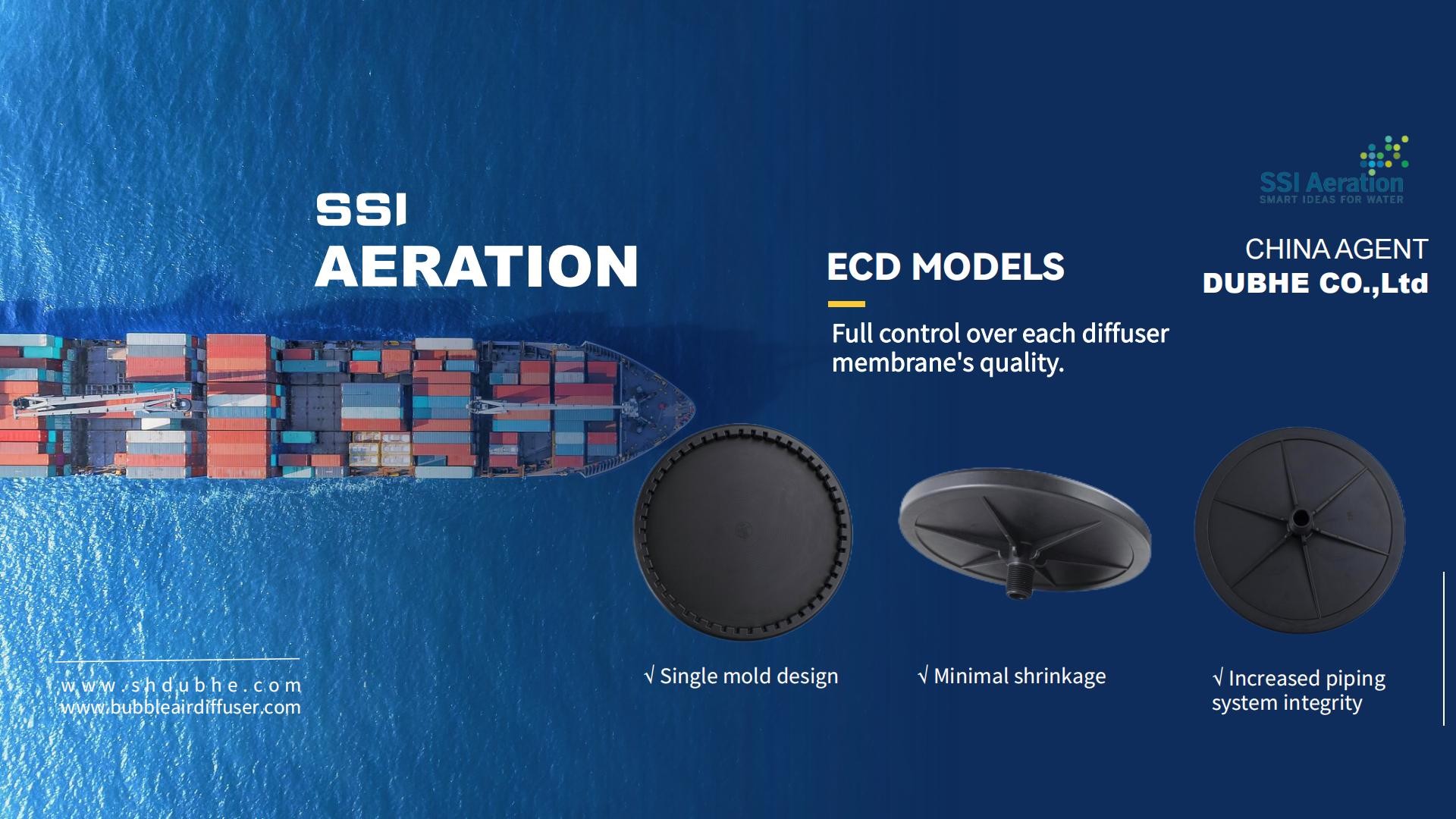
2020 Obtain the Agent Authorization of SSI in CHINA
In 2020 our company obtained agent authorization for SSI in China, this is a big step for us. It proves that our technology has been made  great progress.
2023-08-17
Quantity Advantage
Quantity Advantage
2023-08-17
Customers Visit Our Factory
Customers come to visit the factory, and our relevant person in charge is explaining the products. We believe that good products need repeated inspection and inspection, and we will do our best to provide the information you want.
2023-06-06
Exhibition
Exhibition
 In 2021 our company participate In the drafting of GB/T1.1-2020 for fine bubble diffuser.
2023-08-17
Application Cases with Aeration Diffuser
Wuhan Zhucheng project uses 2080 SSI ECD-270-E Zhongshan Ancient Town Project uses SSI ECD-270-E for a total of 2080  
2024-08-14
Bubble diffuser new technology application prospects
A bubble diffuser is a device widely used in industry and scientific research to introduce gases into liquids and generate bubbles for the purpose of stirring, mixing, and reacting. Recently, a new type of bubble diffuser has attracted extensive attention in the market, which has a series of advantages and features and shows unique application potential in certain fields. First, the bubble diffuser is designed with innovative structures and materials. Compared with traditional bubble diffusers, the unit is more compact, lighter and easier to move and operate. It is also made of special materials that are corrosion- and temperature-resistant, enabling it to operate stably in a variety of harsh environments, thus meeting the needs of different industries and fields. Application: WATER TREATMENT: Bubble diffusers are used in the water treatment process to inject air or oxygen into the water to increase the oxygen content. This helps to improve the conditions for the growth of organisms in the water, such as in pond farming, aquariums, and sewage treatment. Wastewater treatment: In the wastewater treatment process, bubble diffusers help to accelerate the decomposition of organic substances by bacteria, thus purifying the water. Medical field: In medical equipment, bubble diffusers can be used in various treatments, such as oxygen therapy, respiratory therapy, etc., to provide patients with extra oxygen. Biotechnology and laboratories: In laboratories, bubble diffusers are often used to stir and mix samples to facilitate biological or chemical reactions.
2023-12-14
ON SITE VIEW OF POLYMER COMPOSITE GEL
This month, we visited the polymer composite gel manufacture factory and the place for different kinds of test lab. Vacuum-packed to save a lot of space in transportation. Can be stored for many years in a vacuum environment as long as it is not unpacked. Approximately 12.5 kg per cubic meter. factory video.   put into the tank, easy to handle.
2023-12-19
Take part in Shanghai International water exhibition
2024-06-18
IE EXPO in China Shanghai
2024-05-15
ON SITE VIEW OF POLYMER COMPOSITE GEL
This month, we visited the polymer composite gel manufacture factory and the place for different kinds of test lab. Vacuum-packed to save a lot of space in transportation. Can be stored for many years in a vacuum environment as long as it is not unpacked. Approximately 12.5 kg per cubic meter. factory video.   put into the tank, easy to handle.
2023-12-19
The birth of Polymer Composite Gel-new technology of bio-filler
To solve: 1. the carrier is mainly applied to contact oxidation method, the traditional carrier has poor hydrophilicity and low oxygen dissolution efficiency; 2. the small specific surface area of traditional carriers, the attachment amount of microorganisms is small, and the treatment capacity is poor; 3. Reducing sludge discharge and environmental pollution; 4. Traditional MBBR carrier hanging wear equipment corrosion layer, reducing the mission life of sewage treatment equipment; the use of wear debris resulting in damage to pumps & fans. PCG-A new technology of bio-filler works better than MBBR. PCG is a kind of water treatment bio-carrier product based on polymer hydrophilic material, which is inspired by the design of Japan, and referred to the application experience of Japan for about 20 years. Our R&D team has been working on the soft bio-carrier since 2010. In 2010, our R&D team started to develop the soft bio-carrier, and after 6 years of design and development, we finally selected PCG as the soft bio-carrier with high hydrophilicity and biophilicity. After 6 years of design and development, we finally chose a new high molecular weight material with high hydrophilicity, biophilicity, anti-abrasion, aeration and strong specific surface area as the substrate of the biocarrier, which was launched in 2016. After 5 years of small and medium After 5 years of small and medium-sized trials, it will finally be put into large-scale production in 2020. As a biocarrier, PCG is ahead of similar products in China. And our technology now is the newest one about the six generation.   Advantages over traditional technology: Excellent mechanical strength (wear resistance); Synergistic effect, incorporating biogel technology, to promote the growth and biological activity of immobilized advantageous bacterial flora; Enhanced nitrification reaction; Highly efficient adsorption capacity; Simultaneous removal of specific organics (e.g. toxic aromatic compounds);       Hydrophilicity vs. hydrophobicity, oil-absorbing vs. non-oil-absorbing test comparing MBBR and ordinary sponge. Application: Wastewater treatment: Medical field: Biotechnology and laboratories: Beverage and food processing:
2023-12-14
take part in Dubai Water&solar exhibition
On November 14, 2023 we participated in the Water and Solar Energy Exhibition in Dubai
2023-11-14
Customers Inspection
Customers come to the factory for inspection.
2023-08-17
Cooperation with BEWG
DUBHE is one of the qualified suppliers of BEWG Enterprises Water Company, the largest water company in China.
2023-08-17
Contact Us at Any Time
Contact Us
AT ANY TIME
Send your inquiry directly to us
Submit Now
Privacy Policy China Good Quality Bubble Air Diffuser Supplier. Copyright © 2023-2026 bubbleairdiffuser.com . All Rights Reserved.